
Can You Be Charged With DUI In Illinois If Your BAC Is Below 0.08?
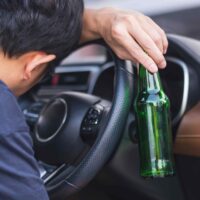
Having a blood alcohol concentration below 0.08 does not guarantee you will avoid a DUI charge in Chicago. Police and prosecutors can still argue that alcohol affected your ability to drive safely, even if your breath or blood test is under the legal limit. They might use your driving behavior, roadside tests, officer observations, statements, video, and other evidence to build their case. While a low test result can make the prosecution’s case harder, it does not require them to drop the charge. We challenge every weak spot in the evidence and make the prosecution prove impairment beyond a reasonable doubt.
Illinois Has More Than One Type Of Alcohol DUI Charge
Illinois law separates a per se DUI charge from an impairment-based DUI charge. Under 625 ILCS 5/11-501(a)(1), it is unlawful to drive or remain in actual physical control of a vehicle with an alcohol concentration of 0.08 or more. That charge focuses on the chemical test result.
A separate provision, 625 ILCS 5/11-501(a)(2), makes it unlawful to drive or remain in actual physical control of a vehicle while under the influence of alcohol. This means the State can pursue an impairment theory without proving that your BAC reached 0.08.
Prosecutors might argue that even a lower alcohol level affected your judgment, reaction time, coordination, or ability to drive safely. We make sure they cannot use assumptions as proof. We look closely at whether the evidence really shows impairment or just that you drank some alcohol.
What A BAC Between 0.05 And 0.08 Means
Illinois law creates different evidentiary rules for different alcohol concentrations. Under 625 ILCS 5/11-501.2(b), a BAC of 0.05 or less creates a presumption that the driver was not under the influence of alcohol. A result above 0.05 but below 0.08 creates no presumption either way. The court may consider that result together with other competent evidence. A result of 0.08 or higher creates a presumption that the driver was under the influence.
So, a BAC of 0.06 or 0.07 does not prove DUI by itself. The prosecution needs more evidence to make their case, and we can challenge that evidence.
We check if the officer may have mistaken nervousness, tiredness, illness, injury, balance issues, speech habits, or things like weather for signs of alcohol impairment. We also compare the officer’s written report with dashboard and body camera footage.
Police May Rely On Driving And Officer Observations
An officer may claim that you were speeding, weaving, braking irregularly, drifting within a lane, or committing another traffic violation. After the stop, the officer may describe bloodshot eyes, an odor of alcohol, slurred speech, fumbling movements, or difficulty following directions.
These observations are not automatically reliable. Bloodshot eyes can result from allergies, exhaustion, contact lenses, smoke, or lack of sleep. The odor of alcohol may show consumption, but it does not establish how much alcohol was consumed or whether you were impaired. Slurred speech may be natural or related to a medical condition.
We review the report alongside video recordings, dispatch records, witness statements, and the officer’s testimony. If the evidence does not match up, we point out the differences and use them to question the officer’s credibility.
Field Sobriety Tests Can Be Challenged
Police often rely on the horizontal gaze nystagmus test, walk-and-turn test, and one-leg stand test. These exercises are designed to help officers look for possible signs of impairment, but they are not perfect measures of driving ability.
Things like the testing surface, lighting, weather, what shoes you are wearing, your age, weight, injuries, balance issues, anxiety, and the officer’s instructions can all affect how you do on these tests. If the officer gives unclear instructions or scores the test wrong, the results can be misleading.
Illinois law permits defendants to present evidence that they lacked the physical capacity to perform standardized field sobriety tests. We examine the administration and scoring of each exercise instead of accepting the officer’s conclusions.
A Chemical Test Result May Not Be Accurate
A breath test result below 0.08 may still become a major part of the prosecution’s impairment case. We investigate whether the device was properly maintained, tested, and operated. Illinois law requires chemical analyses to comply with standards established by the Illinois State Police and to be performed by qualified individuals.
Potential issues include improper observation periods, calibration problems, radio frequency interference, residual mouth alcohol, medical conditions, operator mistakes, and missing maintenance records. Blood testing can raise separate concerns involving collection, labeling, storage, laboratory methods, chain of custody, and contamination.
A test result is evidence, not an unquestionable fact. We demand the underlying records and challenge any failure to follow required procedures.
Prescription And Other Drugs Can Complicate A Low-BAC Case
A driver with a BAC below 0.08 may also be accused of being impaired by alcohol combined with prescription medication, cannabis, or another substance. Under 625 ILCS 5/11-501(a)(4) and (a)(5), Illinois prohibits driving while impaired by drugs or by a combination of alcohol and drugs to a degree that makes safe driving impossible.
Taking prescription medication legally does not automatically protect you from an impairment charge. The State still has to prove every part of the offense. Just having medication in your system does not mean it affected your driving.
We question the toxicology evidence, how much of a substance was involved, the timing, the officer’s training, the medical interpretation, and whether there is a real link between the substance and your actions.
A Low BAC May Avoid A Test-Failure Suspension
Illinois has an administrative license process separate from the criminal DUI prosecution. A person who submits to chemical testing generally faces a statutory summary suspension when the test shows a BAC of 0.08 or more or qualifying drug results. A BAC below 0.08 ordinarily does not trigger the alcohol test-failure suspension described in 625 ILCS 5/11-501.1.
A driver who refuses chemical testing may still face a statutory summary suspension even if the criminal case later involves no BAC result. A driver may request a judicial hearing to challenge a suspension, and 625 ILCS 5/2-118.1 identifies the limited issues the court may review.
The license case and the criminal charge must be handled as separate battles. Winning one does not automatically end the other.
A Strong Defense Requires Immediate Action
A below-limit DUI case often depends on details that can disappear quickly. Video may be deleted, witnesses may become difficult to locate, and testing records may be harder to obtain as time passes.
We move aggressively to preserve recordings, demand laboratory and breath-testing materials, examine the traffic stop, challenge field sobriety testing, and identify medical or physical explanations for the officer’s observations. We also assess whether negotiation can produce the strongest practical result.
Some cases call for a direct courtroom fight. Others require calculated pressure that exposes weaknesses and forces the prosecutor to reconsider the charge. We know the difference, and we prepare every case from the start as though it may have to be tried.
Call Edward Johnson & Associates To Fight Your DUI Charge
A BAC below 0.08 gives the defense room to strike, but it does not guarantee that prosecutors will back down. We challenge unsupported claims of impairment, expose testing weaknesses, confront inconsistent officer testimony, and force the State to prove every element of the charge. We fight aggressively in court while remaining calculated in negotiations. The strongest result may come from defeating the charge, suppressing critical evidence, or using the weaknesses in the case to secure a favorable resolution.
Edward Johnson & Associates represents clients from offices located in Chicago, Illinois, and serves clients throughout the entire Chicagoland metro. Our attorneys are relentless when the prosecution’s case should be challenged and strategic when negotiation can protect the client’s future.
Contact our Chicago DUI defense attorney at Edward Johnson & Associates P.C. to receive a free consultation by calling 708-762-8666.
