
Do You Have to Answer Police Questions During a Traffic Stop in Illinois?
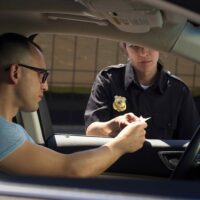
A traffic stop can turn serious the moment an officer begins asking questions that go beyond your license, registration, and insurance. What sounds like casual conversation may be an effort to build probable cause, justify a search, or secure an admission that can be used against you. You should remain calm, keep your hands visible, and comply with lawful instructions, but you do not have to volunteer information that may expose you to criminal charges.
Silence must be handled correctly because arguing, physically resisting, or refusing required documents can create new legal problems. We protect clients in Chicago by attacking unlawful stops, challenging extended detentions, and preventing prosecutors from twisting roadside statements into evidence of guilt.
The Information You Must Provide During An Illinois Traffic Stop
When you are driving in Illinois, an officer may require you to produce a valid driver’s license. Under 625 ILCS 5/6-112, a driver must carry a license or permit while operating a motor vehicle and display it upon demand by a police officer. The statute defines display as physically surrendering the license to the officer for inspection.
You should also provide required vehicle and insurance documentation when lawfully requested. Handing over these documents is different from answering investigative questions about where you were, where you are going, whether you were drinking, or what may be inside the vehicle.
Drivers using an Illinois mobile driver’s license receive an important statutory protection. Under 625 ILCS 5/6-101, displaying a mobile license does not give an officer consent to search other data or applications on the phone.
We advise clients to provide legally required documents without volunteering additional facts. A traffic ticket is easier to defend than a recorded admission that gives the prosecution evidence it did not have before the questioning began.
You Have The Right To Remain Silent
The Fifth Amendment protects you from being compelled to incriminate yourself. During a traffic stop, you can generally decline to answer questions that seek potentially incriminating information.
You can say, “I am exercising my right to remain silent,” or “I do not wish to answer questions.” State that position clearly and respectfully. Do not lie. Giving false information can create additional complications, while silence avoids supplying the officer with statements that may later be taken out of context.
A routine traffic stop does not always qualify as custody for Miranda purposes. Under the United States Supreme Court’s decision in Berkemer v. McCarty, roadside questioning during an ordinary traffic stop may occur without Miranda warnings because the driver is not necessarily considered in custody at that point.
That rule makes caution critical. The absence of a Miranda warning does not mean your answers cannot be used against you. An officer may ask questions before an arrest, and the prosecution may later rely on your responses.
When Police Ask “Where You Have Been?”
Yes. Officers can ask questions, including questions unrelated to the original traffic violation. You are not automatically required to answer every question merely because it came from a police officer.
Questions about your destination, recent activities, drinking, drug use, weapons, or items in the vehicle may be investigative. A response such as “I had only two drinks” may become evidence in a DUI case. A nervous explanation about a package or passenger may be used to support further detention.
We recommend avoiding roadside debates. Clearly assert your right to remain silent, then stop talking. Continuing to explain after invoking silence can defeat the purpose of asserting the right.
Can An Officer Extend The Stop To Ask More Questions?
The Fourth Amendment limits the duration and scope of a traffic stop. Police may take reasonable steps connected to the stop, including checking the driver’s license, confirming registration, investigating outstanding warrants, and issuing a citation or warning.
Under Rodriguez v. United States, police generally may not prolong a traffic stop beyond the time reasonably necessary to address the traffic violation unless additional reasonable suspicion supports the extension. The Supreme Court held that officers cannot add time to the stop merely to conduct an unrelated dog sniff.
Not every extra question automatically makes a stop unlawful. The critical issue is whether the questioning measurably extended the detention and whether the officer had specific facts supporting suspicion of another offense.
We examine body-camera footage, squad-car video, dispatch records, citation timestamps, and the sequence of questioning. If officers unlawfully prolonged the stop, we may file a motion to suppress evidence discovered during the extension.
Do You Have To Consent To A Vehicle Search?
No. You do not have to consent merely because an officer asks. You may state, “I do not consent to any searches.”
Refusing consent is not the same as physically interfering with an officer. If police search anyway, remain calm and do not attempt to block them. We can later challenge whether they had probable cause, valid consent from another person, or another lawful basis for the search.
Consent can severely damage a defense because the prosecution may claim that you voluntarily allowed police to search. Do not assume that cooperating means surrendering every constitutional protection. You can remain respectful while refusing permission.
Do Not Turn A Traffic Stop Into An Obstruction Charge
You should assert your rights firmly, but never physically resist, threaten the officer, or interfere with lawful police activity. Under 720 ILCS 5/31-1, knowingly resisting arrest or obstructing an officer performing an authorized act is a Class A misdemeanor.
The roadside is not the place to fight the officer physically or argue the full legal case. Our work begins after we secure the reports, video, and evidence. We fight in court, where the officer’s conduct can be tested under the Constitution and Illinois law.
Call Edward Johnson & Associates After An Illinois Traffic Stop Or Arrest
A traffic stop can become a criminal case because of one careless answer, one unsupported search, or one officer who pushes beyond the limits of the law. We do not accept the prosecution’s version without a fight. We examine every second of the stop, challenge unlawful detention, attack questionable searches, and confront unreliable police testimony. When the State’s case has weaknesses, we use them aggressively. When negotiation creates the strongest path forward, we apply pressure strategically and demand terms that protect our client.
Edward Johnson & Associates represents clients from its Chicago, Illinois office and serves clients throughout the entire Chicagoland metro. Our attorneys are relentless in the courtroom, calculated in negotiations, and fiercely protective of every client’s constitutional rights. Contact our Chicago criminal defense attorney at Edward Johnson & Associates P.C. to receive a free consultation by calling 708-762-8666.
