
What To Do When Driving Through A DUI Checkpoint
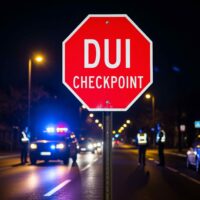
Flashing lights and a line of cars at a DUI checkpoint can make any driver nervous. Your actions in the next few minutes can determine if you leave quickly, face more questions, or get arrested for DUI. Illinois law permits sobriety checkpoints when they are run correctly, but police do not have unlimited power. You still have constitutional rights, and officers must have a reason to keep you longer than the initial stop. We advise our clients to stay calm, keep conversation to a minimum, and avoid giving police more information than necessary.
A DUI checkpoint is an investigation. Police officers in Chicago pay attention to how you drive in, how you talk, if they smell alcohol or cannabis, your movements, your eyes, and anything they can see inside your car. Take the situation seriously right from the start.
Understand That Illinois DUI Checkpoints Can Be Legal
The Fourth Amendment normally protects you against unreasonable searches and seizures. A checkpoint stop is a seizure because the government is temporarily stopping your vehicle without individualized suspicion.
The United States Supreme Court nevertheless upheld properly structured sobriety checkpoints under the Fourth Amendment in Michigan Department of State Police v. Sitz, 496 U.S. 444 (1990). The Court balanced the government’s interest in preventing impaired driving against the limited intrusion imposed on motorists. The Illinois Supreme Court has likewise recognized the constitutionality of properly conducted sobriety checkpoints, including in People v. Bartley, 109 Ill. 2d 273 (1985).
Not every checkpoint stop is automatically legal. How police choose cars, run the checkpoint, and decide to keep someone longer can all matter if we challenge the evidence in court.
Keep Your Answers Limited And Controlled
Stay calm and give officers the documents they are allowed to ask for, like your driver’s license and proof of insurance. Do not turn the stop into a situation where you give information that could be used against you.
An officer may ask:
- Where are you coming from?
- Have you been drinking?
- How many drinks did you have?
- When was your last drink?
Those questions are designed to gather evidence. A casual answer such as, “I only had two beers,” can become a major part of the prosecution’s case.
You do not improve your position by lying. You also do not need to volunteer a detailed explanation of your evening. We want clients to be respectful, controlled, and careful about making statements that can later be used against them.
Know What Officers Are Looking For
Illinois DUI law is broader than simply having a blood alcohol concentration of .08 or higher.
Under 625 ILCS 5/11-501, a person may not drive or be in actual physical control of a vehicle with an alcohol concentration of .08 or more. The statute also prohibits driving while under the influence of alcohol, drugs, intoxicating compounds, or combinations of those substances to a degree prohibited by law.
That means prosecutors may try to build a DUI case even when there is no breath-test result above .08. They may rely on officer observations, driving behavior, admissions, field sobriety testing, video, and other evidence.
We attack that evidence piece by piece. Red eyes can have innocent explanations. Nervousness is common during police encounters. Poor balance may result from physical conditions, footwear, road surfaces, or weather. An officer’s interpretation is not automatically proof beyond a reasonable doubt.
Do Not Confuse Field Tests With Chemical Testing
One of the biggest mistakes drivers make is treating every DUI test as though the same legal rules apply.
Roadside field sobriety exercises and post-arrest chemical testing raise different legal issues. Police may ask a driver to perform standardized field sobriety exercises to help determine whether probable cause exists for arrest.
Chemical testing after a DUI arrest is governed by Illinois’ implied-consent statute, 625 ILCS 5/11-501.1. A person who drives or is in actual physical control of a motor vehicle on Illinois public highways is deemed to have consented, subject to statutory requirements, to qualifying chemical testing when arrested for DUI and the officer has the required probable cause.
A refusal can carry serious driver’s license consequences. It can also become evidence in a later DUI proceeding. Under 625 ILCS 5/11-501.2, evidence of refusing a qualifying chemical test may be admissible in a criminal or civil case arising from alleged impaired driving.
This is why decisions involving breath, blood, or urine testing should never be treated casually.
Never Argue With Officers At The Checkpoint
A checkpoint is not the place to win a constitutional argument.
We fight illegal stops, unlawful detention, improper testing, unreliable evidence, and constitutional violations in court, where the prosecution has to answer for what police did. Arguing on the roadside rarely helps. It can prolong the encounter and create additional statements or conduct that officers may later characterize negatively.
Stay composed. Do not physically resist. Do not interfere with the investigation. Remember what happened.
If an arrest follows, we can dissect the checkpoint procedure, officer observations, body-camera footage, squad-car video, test administration, warnings, reports, and chemical evidence.
What Happens If Police Arrest You At The Checkpoint?
An arrest does not equal a conviction.
Once prosecutors file a DUI case under 625 ILCS 5/11-501, they still must prove the charge. The defense may involve challenging whether officers had adequate grounds to extend the checkpoint stop, whether probable cause supported the arrest, whether field sobriety tests were administered properly, whether statements should be admitted, or whether chemical testing followed Illinois law.
We do not surrender because the police report sounds confident. We investigate what actually happened.
At Edward Johnson & Associates, we know when a case calls for an aggressive courtroom challenge and when a calculated negotiation can put our client in a stronger position. Prosecutors need to know we are prepared to fight. That leverage can matter both in court and at the negotiating table.
Fight Your DUI Charge With Edward Johnson & Associates
A DUI checkpoint arrest can threaten your driver’s license, criminal record, employment, finances, and freedom. Police may act as though their roadside observations settle the issue. They do not. Prosecutors still have to prove their case, and every part of the arrest can be tested against constitutional requirements and Illinois DUI law.
At Edward Johnson & Associates, we defend clients aggressively because the government should never get an uncontested path to a conviction. We examine the checkpoint, challenge weak police conclusions, attack improper evidence, question testing procedures, and force the prosecution to prove what it claims happened.
We are also strategic. Fighting hard does not mean fighting blindly. When the prosecution has weaknesses, we use them. When negotiations can produce a favorable resolution, we know how to apply pressure and choose the right moment to negotiate. Our goal is to put you in the strongest position available, whether that means challenging the case in court or striking a calculated agreement that protects your future.
Edward Johnson & Associates has offices in Chicago, Illinois, and represents clients throughout the entire Chicagoland metro. Contact our Chicago DUI lawyer at Edward Johnson & Associates P.C. to receive a free consultation by calling 708-762-8666. Our Chicago criminal defense lawyer is prepared to fight for you.
