
Can You Be Arrested For Carrying A Gun In Your Car In Illinois?
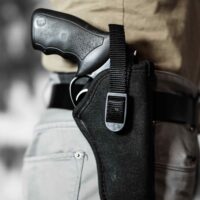
Yes, you can be arrested for carrying a gun in your car in Illinois if you possess, carry, or store it in a way that breaks state or federal law. Not every gun found in a vehicle is considered legal. Factors like your Firearm Owner’s Identification Card status, whether you have a concealed carry license, where the gun is located, if it’s loaded, and how easily you can reach it all play a role. Even a lawful gun owner can be arrested for a single mistake during a traffic stop. When the State brings a weapons charge, we act fast, challenge weak evidence, and make the prosecution prove every part of their case.
A Valid FOID Card Does Not Authorize Every Form Of Carry
Illinois residents generally need a valid Firearm Owner’s Identification Card to possess firearms or ammunition. Under 430 ILCS 65/2, a person may not possess a firearm or ammunition in Illinois without a FOID card unless a statutory exception applies.
A FOID card means you are allowed to own a firearm, but it does not give you the right to carry a loaded and easily accessible handgun in your car.
Illinois law generally permits a valid FOID cardholder to transport a firearm when it is:
- Broken down into a non-functioning state
- Not immediately accessible
- Unloaded and enclosed in a case, firearm carrying box, shipping box, or another container
These transportation protections appear in 720 ILCS 5/24-1 and 720 ILCS 5/24-1.6.
If your gun is loaded, not in a case, and easy to reach, police can arrest you even if you have a valid FOID card.
A Concealed Carry License Changes The Vehicle Rules
If you have a valid Illinois concealed carry license, you can usually carry a concealed handgun in your vehicle, as long as you follow the rules in the Firearm Concealed Carry Act. Your license must be current, and you need to follow all rules about where you can carry, how you store the gun, and not carrying while under the influence.
A concealed carry license does not protect someone who carries while under the influence. Under 430 ILCS 66/70, carrying a concealed firearm while under the influence of alcohol, drugs, or an intoxicating compound can lead to a misdemeanor for an initial violation and more serious consequences for repeated violations.
We check if your license was valid, if the police judged how you carried the gun correctly, and if the officer had a legal reason to extend the traffic stop or search your car.
An Unloaded Gun Can Still Lead To Charges
Many people assume an unloaded gun is automatically legal inside a car. That is wrong.
Under 720 ILCS 5/24-1.6, an unloaded handgun may still support an aggravated unlawful possession charge when it is uncased, ammunition is immediately accessible, and the person does not have a valid concealed carry license. The same statute provides protection when a valid FOID cardholder keeps the firearm unloaded and enclosed in an appropriate case or container.
The location of ammunition matters. So does the position of the firearm. A handgun under the driver’s seat, in an open center console, or beside loaded magazines may create a far more serious problem than a properly cased firearm secured away from the passenger compartment.
Aggravated Unlawful Possession Can Be A Felony
Carrying a firearm in a vehicle under prohibited circumstances may result in aggravated unlawful possession of a weapon under 720 ILCS 5/24-1.6. The statute addresses loaded or unloaded firearms that are uncased and accessible, possession without a valid FOID card, certain prior convictions, active protection orders, and other aggravating factors.
A standard aggravated unlawful possession offense is generally classified as a Class 4 felony. Prior felony convictions and other aggravating circumstances can expose a defendant to higher classifications and mandatory prison ranges.
We take these cases seriously. A felony gun conviction can put your freedom, job, professional licenses, and future gun rights at risk. We challenge the stop, the search, how the gun was possessed or accessed, your license records, and any other claims the State makes.
Felons And Other Prohibited People Face Greater Exposure
Illinois law makes it a felony for a person with a prior felony conviction to knowingly possess a firearm or firearm ammunition unless lawful relief has been granted. Under 720 ILCS 5/24-1.1, unlawful firearm possession by a felon is generally a Class 3 felony, with more severe sentencing ranges in qualifying cases.
Federal law also prohibits several categories of people from possessing firearms or ammunition under 18 U.S.C. Section 922(g). These categories include certain convicted felons and other individuals whose status creates a federal firearm disability.
When state and federal exposure overlap, the stakes rise fast. We analyze the prior record, the legality of the alleged possession, and whether prosecutors can prove that you knowingly exercised control over the firearm.
Police Must Still Conduct A Lawful Stop And Search
The presence of a firearm does not erase your constitutional rights. Police must have a lawful basis for the traffic stop and a legally sufficient reason to search the car.
A weapon may be suppressed when officers discovered it through an unlawful detention, unsupported search, defective consent, or another constitutional violation. We examine body-camera footage, squad-car video, dispatch records, police reports, alleged statements, and the exact sequence of events.
We do not accept the officer’s version without testing it. When the search was unlawful, we fight to keep the firearm and related evidence out of court. When the State cannot prove possession or knowledge, we press for dismissal or prepare to force the issue at trial.
Call Edward Johnson & Associates About An Illinois Gun Charge
A firearm arrest can put your freedom and future at risk. Prosecutors move aggressively in Chicago gun cases, and we meet that pressure head-on. We investigate the stop, attack unlawful searches, challenge claims of possession, verify FOID and concealed carry records, and expose weaknesses in the prosecution’s evidence.
We know when to press for dismissal, when to challenge evidence in a suppression hearing, and when a calculated negotiation can protect the client from a worse result. We fight hard, but we do not fight blindly. Every move must improve your position.
Edward Johnson & Associates represents clients from its office in Chicago, Illinois, and serves clients throughout the entire Chicagoland metro. Contact our Chicago firearm defense attorney at Edward Johnson & Associates P.C. by calling 708-762-8666 to receive your free consultation.
