
Should You Refuse A Breath Test After An Illinois DUI Arrest?
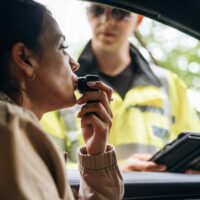
Refusing a breath test after a DUI arrest in Chicago is not an easy way out. While it might stop the State from getting one kind of chemical evidence, it can lead to a longer license suspension and other urgent problems. Police and prosecutors can still use your driving, field sobriety tests, body camera video, witness statements, what you say, and things like slurred speech or the smell of alcohol. The best choice depends on which breath test is requested, when it happens, and the details of your arrest. We look at every angle in DUI cases to protect our clients from both the criminal charge and the separate license suspension.
Know Which Breath Test The Officer Is Requesting
Illinois law distinguishes between a preliminary roadside breath test and the evidentiary chemical test generally requested after a DUI arrest.
Under 625 ILCS 5/11-501.5, an officer who reasonably suspects DUI may request a preliminary breath screening test before arrest. The portable roadside device is primarily used to help the officer decide whether to make an arrest or request further chemical testing.
After an arrest, the officer may request an evidentiary breath, blood, urine, or other bodily-substance test under Illinois’ implied-consent law. Section 11-501.1 provides that a person driving on Illinois public highways is deemed to have consented to qualifying chemical testing after a DUI arrest.
Mixing up these two tests can be a costly mistake. We check which test was requested, when it was asked for, what warnings you got, and if the officer followed the law.
Refusal Can Trigger A Longer License Suspension
Refusing or failing to complete the post-arrest chemical test generally results in a statutory summary suspension. For a qualifying first refusal, 625 ILCS 5/6-208.1 provides for a 12-month suspension. A later qualifying refusal can lead to a three-year suspension.
By comparison, submitting to testing and producing a result at or above the legal threshold can trigger a shorter suspension in many first-offense cases. That does not mean taking the test is always the better choice. It means that refusal carries a high administrative price.
The license suspension is separate from the criminal DUI case. You can still lose your license even if your DUI charge is dropped or you are found not guilty. We handle the license issue as its own case and act fast to challenge it.
Refusal Does Not Make The DUI Case Disappear
Illinois prosecutors do not need a breath-test number to pursue a DUI conviction. Under 625 ILCS 5/11-501, the State may charge a person with driving while under the influence even without proving a blood alcohol concentration of 0.08 or more. The prosecution may attempt to prove that alcohol impaired the person’s ability to drive safely.
The State may build its case with dash camera footage, body camera recordings, officer testimony, field sobriety exercises, statements, driving conduct, and evidence from the traffic stop. A refusal may also become part of the State’s presentation.
We do not just accept what the prosecution says. We check if the stop was legal, question weak observations, challenge field tests, point out contradictions, and make the State prove every part of their case.
Chemical Test Evidence Can Be Challenged
Submitting to a breath test does not make the result untouchable. In Illinois, chemical testing must comply with required standards to be treated as valid and admissible.
We examine whether the operator was properly authorized, the machine was approved and maintained, required observation procedures were followed, and the test was administered correctly. Medical conditions, mouth alcohol, machine errors, improper procedure, and inaccurate documentation may affect the reliability or admissibility of a result.
A strong defense does not stop at the printed number. We attack the foundation supporting it.
You Can Challenge The Statutory Summary Suspension
Illinois law allows a driver to petition the circuit court for a hearing to challenge a statutory summary suspension. Under 625 ILCS 5/2-118.1, the hearing is limited to specific issues, including whether the officer had reasonable grounds, whether the person was properly arrested, whether the required warnings were given, and whether the person refused or failed testing as alleged.
The suspension generally takes effect on the forty-sixth day after notice. Waiting gives the State an advantage.
We move fast, examine the sworn report, subpoena evidence when necessary, and attack defects in the suspension process. Some cases should be fought hard at hearing. Others call for calculated negotiation on the criminal charge. We know the difference.
Fight The DUI Charge With Edward Johnson & Associates
A breath-test refusal creates a two-front battle. You may face a criminal DUI prosecution and a separate statutory summary suspension that can take effect before the criminal case is resolved. We move aggressively to challenge unlawful police conduct, unreliable field testing, weak observations, defective warnings, improper testing procedures, and unsupported claims that a refusal occurred.
Edward Johnson & Associates fights for clients in court and applies calculated pressure in negotiations. We know when the prosecution’s case should be attacked head-on and when a strategically structured resolution may protect the client from greater risk. Our duty is to protect your license, your record, and your future with strength and discipline. Contact our Chicago DUI lawyer at Edward Johnson & Associates P.C. to receive a free consultation by calling 708-762-8666.
